
Research
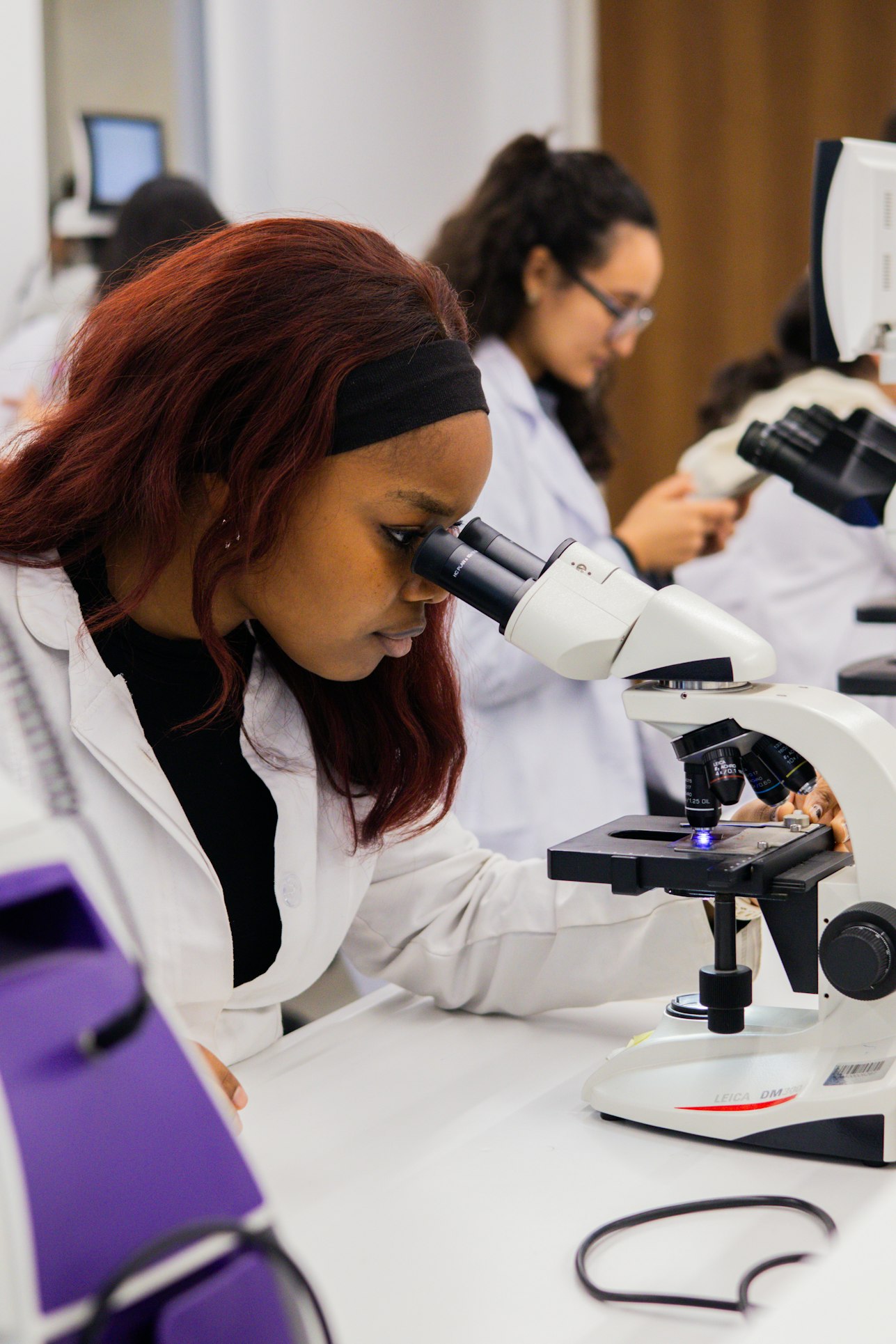
DeepMind explains how genome predictions can narrow laboratory searches
A new research interview describes AlphaGenome Atlas as a way to prioritize questions, rather than replace experiments.
Gemini 4 Neon targets faster completion of professional work
Google pairs a million-token context window with a model positioned for coding, analytical work and science.
Intel outlines software route to post-quantum acceleration on existing CPUs
Intel highlights available cryptographic libraries and OpenSSL integration as a way to adopt quantum-resistant security without replacing compatible hardware.
NVIDIA announces Nemotron for Science for locally run research agents
The toolkit combines an open model, chemistry data and training recipes to help researchers build agents that plan experiments and work with simulations.
OpenAI introduces MedChemBench to assess AI drug-research reasoning
The benchmark probes molecular understanding and compound selection, while highlighting limits in translating test scores into useful laboratory decisions.
OpenAI reports AI-assisted planet candidates awaiting scientific review
Two amateur astronomers used Codex and Astra to search public telescope archives, producing leads for professional assessment rather than confirmed discoveries.
OpenAI reports protein-design results from GPT-6 research
A preprint describes laboratory binding results for GPT-6.2 designs, while acknowledging that specialized biology models remain essential to the tested workflow.
OpenAI reports uneven gains from coding agents in research
Internal estimates show rising autonomous task completion, but substantial differences between monitoring experiments and writing infrastructure code.
Google's quantum experiment tests contextuality at larger scale
The research probes a foundational quantum property and offers another way to detect subtle hardware errors.
Ultrathin silver opens a route to compact photonic devices
ICFO and university partners report stronger nonlinear optical responses in silver films only a few nanometres thick.
CRG develops a six-gene approach to studying leukaemia prognosis
A Science Advances study connects mouse experiments with patient data to identify a potential prognostic score for acute myeloid leukaemia.
ICFO team improves electrolysis by managing oxygen bubbles
A catalyst interface designed to release bubbles more readily shows improved electrochemical performance in research published in ACS Catalysis.